How to apply block paving sealer
Read our step-by-step guide on how to apply block paving sealer the correct way to avoid costly mistakes.
*You should never apply a block paving sealer to wet or dirty paving blocks*
1. Sweep clean and inspect your paving
To begin with, always sweep clean the paving blocked area of patio or driveway that is to be sealed. Then inspect your block paving for damage. It is important you do this as it will be very difficult to rectify any damaged or oil stained paving after the application of a sealer. If you need to replace any cracked, chipped, oil stained or damaged paving blocks then now is the time to do this. Always try to replace old block paving with a similar looking block paving type so the pavior doesn’t stand out. If you need to buy new paving bricks then try to match the colours of the pavers. A good tip is to take a photo of your existing paving then take that to the stockists or builders yard where you intend to buy from. Show them the photo and they should be able to colour match your paving to your existing pavers.
2. Does your block paving need to be cleaned?
Before you apply a block paving sealer you need to decide if your paving needs to be cleaned. Remember, your paving must be clean & weed free before you apply a sealer otherwise your sealer will not completely adhere to your paving. If your paving needs to be cleaned is it:
Moss and weeds – They need to be completely removed before applying a sealer. You need to apply a weedkiller or suitable moss and algae remover to the driveway or patio block paving a few days before you clean the paving blocks to allow the weeds and moss to die. There are many ways to do this. If you want more information on removing weeds and moss before applying a sealer then find more info here
Efflorecence – A white blooming on the surface of the paving. Try scrubbing with a stiff brush, as often the salts will simply brush off. If not then a gentle scrub with efflorescence cleaner will be needed.
Dirt and stain removal – use a good quality de-greaser or paving cleaner to remove the stains and dirt. In all cases apply the cleaner and then wash off. If you use a high powered jet wash then clean at an angle (30 – 45 degrees) that doesn’t remove all the sand in the paving joints. Some newly laid block paving may not need to be cleaned, but remember that the sealer will seal the surface once applied and if left with dirt on the surface, the sealer may not be fully absorbed by the paving and worse, the sealer will trap any dirt underneath and may not adhere to the paving surface leading to flaking of the sealer at a later date.
3. Allow your paving to completely dry
Before any sealer is applied the surface and joints it is very important to understand that they must be completely dry (the dryer the better). Allowing the block paving joints and surface to completely dry will ensure that the paving fully absorbs the sealer achieving best results.
4. Make sure joints are full of sand
For the best results, your paving joints must be full of dry sand before you apply the sealer. Use kiln dried sand ensuring all the joints are full and any excess sand is swept off the surface of the block paving bricks prior to application. If the sand is not removed the sealant will set the sand hard onto the surface of the paving blocks (a soft brush is good for removing all excess sand).
TIP. If possible, brush in the dry jointing sand on the day you are going to apply the sealer. This is especially true if you have previously cleaned your paving before hand. That way you are guaranteed the joint sand will be dry. You will have to allow more time to the sealing job as this takes a while.
Applying the sealer to your block paving
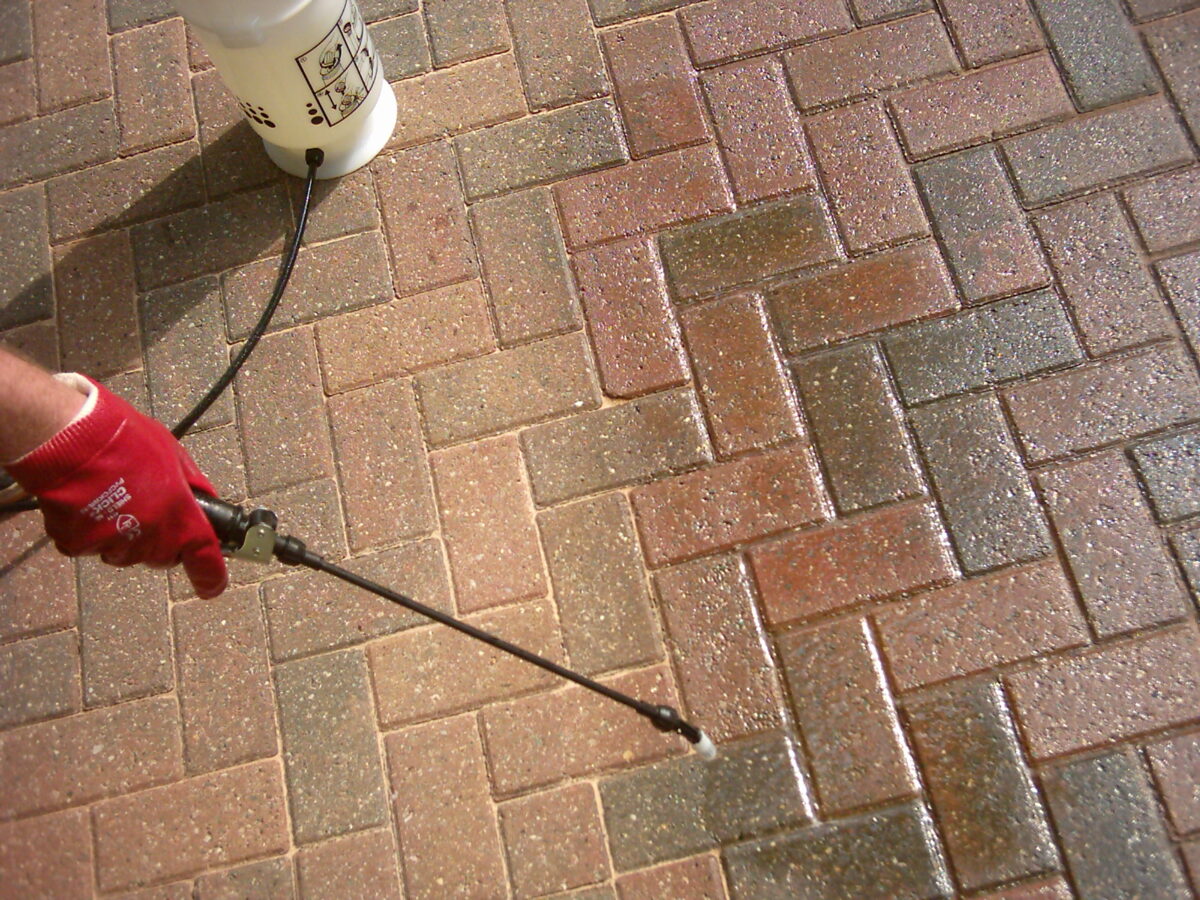
Choose what application tools you are going to be using. The sealer can be applied to the block paviors using a large roller and tray, brush or block paving sealer sprayer, make sure if the sealer is solvent based to use a vitron equiped sprayer unit. The roller should be of a polyester type. Always wear protective / old clothing. Gloves and a respiratory mask are highly advisable when applying a solvent based block paving sealer. Put enough block paving sealant in the tray to fill but not overflow. It is always best to saturate the surface area to be sealed especially the paving joints but don’t allow the sealer to pool. It is always best to apply a second coat of sealer in the opposite direction of the first. That way no areas are missed. This should be done as soon as the first coat of sealer has dried, usually within 4 hours but it is dependant on the weather conditions. Please refer to instructions on timescale for second coats of sealer.
Once the application of Block paving sealer is complete, vehicular traffic should be kept off the paving for at least 24 hours. If you need to walk on the paving before completely dry then please wear an outdoor pair of shoes.
Sit back and admire your sealed block paving.
If you require help with any of the above please contact us
Need a local block paving contractor or a sealing contractor please contact us.


